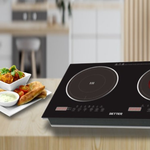








Choosing between an induction and infrared cooker confuses many first-time buyers. Both offer a convenient alternative to traditional gas stoves and can be useful when LPG prices rise or gas supply becomes inconvenient. Although both use electricity, they heat cookware in completely different ways. This guide explains the real difference between induction and infrared cooker technology. It also compares cooking speed, electricity consumption, safety, cookware compatibility, and everyday usability to help you decide which option fits your kitchen.
How an Induction Cooker Works
An induction cooker uses electromagnetic energy to heat cookware directly. When a compatible magnetic pot is placed on the cooking zone, the electromagnetic field generates heat inside the cookware rather than heating the surface in the same way as a conventional electric stove. Induction cookers only work properly with magnetic, flat-bottomed cookware such as iron and certain types of stainless steel. The cooking surface itself stays relatively cooler compared with infrared cookers, although it can still become warm from heat transferred back from the pot. This direct heating method makes induction cooking fast and efficient. It is particularly useful for boiling water, preparing curries, frying, and other everyday cooking tasks where quick temperature changes are important.
How an Infrared Cooker Works
An infrared cooker generates heat using halogen lamps or electric heating elements located beneath the cooking surface. The heating element becomes extremely hot and transfers radiant heat through the glass surface into the cookware placed above it. Unlike induction, infrared cookers work with almost any type of cookware. Glass, clay, aluminium, stainless steel, ceramic, and other flat-bottomed pots can generally be used without requiring magnetic properties. This universal cookware compatibility makes infrared cookers attractive to households that already have a collection of traditional pots and pans. You can start cooking without replacing your existing cookware.
Induction vs Infrared Cooking Speed
Induction cookers generally heat cookware faster than infrared models because electromagnetic energy is transferred directly into the pot. This allows the cookware to reach the desired temperature quickly and gives users faster control when changing heat levels. Infrared cookers heat through a radiant element beneath the surface, so there can be a small delay before the cookware reaches the required temperature. The difference may not matter for simple meals, but it becomes more noticeable when boiling water or cooking dishes that require frequent temperature adjustments. For users who prioritize quick cooking, induction usually has the advantage. Infrared remains perfectly capable for everyday meals and can still provide consistent heating when used with suitable cookware.
Induction vs Infrared Electricity Consumption
Both cooking methods can be more efficient than traditional electric coil stoves because they transfer electrical energy into cooking heat effectively. However, induction generally has an efficiency advantage because the cookware is heated directly instead of relying on radiant heat from a separate heating element. Actual electricity consumption depends on the cooker’s wattage, cooking duration, temperature setting, and type of food being prepared. A higher-powered cooker may consume more electricity per hour but can sometimes finish cooking faster. For households concerned about electricity bills, it is better to consider both wattage and actual cooking time rather than choosing a cooker based only on its advertised power rating.
Induction vs Infrared Safety
Induction cooktops stay relatively cooler during active cooking because the cookware itself is the primary source of heat. This can reduce the chance of accidental burns, although the area beneath a hot pot can still remain warm after cooking. Infrared cooktops become noticeably hotter because the heating element transfers heat through the cooking surface. Users should therefore allow the surface to cool before touching or cleaning it. Both cooker types may include useful safety features such as automatic shut-off, overheating protection, and temperature controls. These features make electric cookers convenient for daily use, but users should still follow basic cooking and electrical safety precautions.
Cookware Compatibility: A Key Difference
Cookware compatibility is one of the biggest differences between induction and infrared cookers. Induction models require magnetic cookware to create the electromagnetic reaction needed for heating. If a magnet sticks firmly to the bottom of your existing pot, it is generally suitable for induction cooking. Infrared cookers do not have this requirement and can work with a much wider variety of cookware. Therefore, if you already own aluminum, ceramic, glass, or clay pots and do not want to replace them, an infrared cooker may be the more practical choice.
Which Should You Buy?
If you want faster cooking, better temperature responsiveness, and efficient direct heating, choose induction. It is a strong option for households that do not mind purchasing compatible magnetic cookware. If cookware flexibility is more important, choose infrared. It works with most flat-bottomed cookware and lets you continue using the pots and pans you already have. For small kitchens, hostels, rented apartments, or single-person households, both options can be practical. Your final choice should depend on cooking habits, available cookware, electricity usage, and the features you value most.
Where to Buy Induction and Infrared Cookers in Bangladesh
Star Tech offers a range of induction cookers from different brands and price categories. Buyers can also find infrared cooking options such as the Smart SEK-IC353R and Smart SEK-IC227S. When choosing a cooker, compare heating technology, power rating, cookware compatibility, safety features, warranty, and overall build quality rather than focusing only on price. Nationwide delivery also makes it convenient for buyers outside Dhaka to order their preferred cooker online.